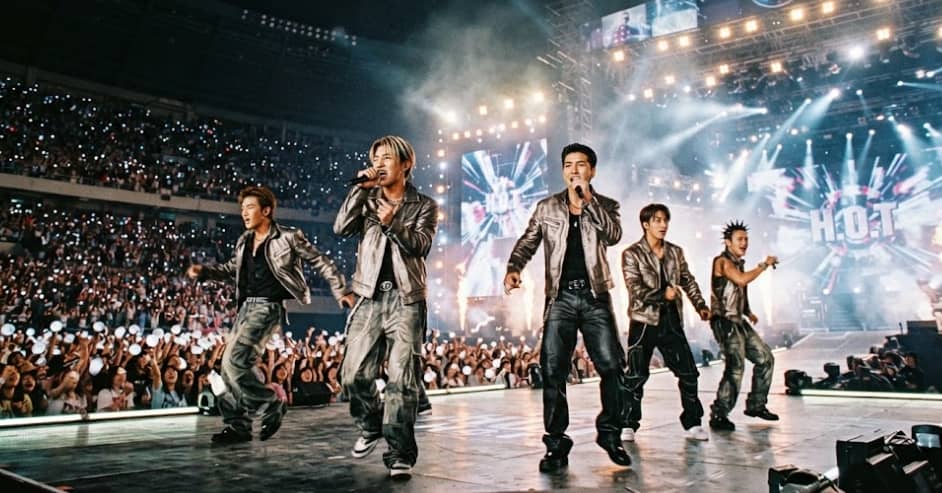
Before BTS, BLACKPINK, and other global K-pop stars introduced Korean music to the world, a group of pioneering artists created the foundation of the industry. These early K-pop groups introduced idol culture, powerful performances, organized fandoms, and unique music concepts that later generations followed.
The first generation of K-pop is generally considered to have started in the early 1990s and continued until the early 2000s. During this period, artists experimented with new sounds, especially hip-hop, dance-pop, and R&B, while entertainment companies developed the idol training system.
Groups like Seo Taiji and Boys changed the direction of Korean popular music, while H.O.T. created the modern idol group model. Together, these artists helped shape the K-pop industry that millions of fans enjoy today.
1st Generation K-Pop Groups
The following groups are remembered for their popularity, cultural influence, memorable songs, and contribution to K-pop history.
| Rank | Group | Debut Year |
|---|---|---|
| 1 | H.O.T. | 1996 |
| 2 | Sechs Kies | 1997 |
| 3 | Shinhwa | 1998 |
| 4 | S.E.S. | 1997 |
| 5 | g.o.d | 1999 |
| 6 | Fin.K.L | 1998 |
| 7 | Baby V.O.X | 1997 |
| 8 | Seo Taiji and Boys | 1992 |
| 9 | Turbo | 1995 |
| 10 | Fly To The Sky | 1999 |
| 11 | Deux | 1993 |
| 12 | DJ DOC | 1994 |
| 13 | R.ef | 1995 |
| 14 | Diva | 1997 |
| 15 | Roo’ra | 1994 |
| 16 | S#arp | 1998 |
1. H.O.T. (High-Five Of Teenagers)
| Category | Details |
|---|---|
| Members | Moon Hee-jun, Jang Woo-hyuk, Tony Ahn, Kangta, Lee Jae-won |
| Famous Songs | “Candy,” “Happiness,” “We Are The Future” |
| Status | Reunited |
H.O.T. is one of the most important groups in K-pop history. Debuting under SM Entertainment in 1996, they are widely recognized as the group that established the modern idol group system.
They combined catchy songs, synchronized choreography, stylish fashion, and strong fan culture. Their success created a new formula for Korean entertainment companies.
H.O.T. also helped introduce organized fandom culture, where fans created official clubs and supported artists through concerts and events.
After their breakup in 2001, members continued individual careers. The group reunited in 2018, giving longtime fans a memorable comeback.
2. Sechs Kies
| Category | Details |
|---|---|
| Members | Eun Ji-won, Lee Jae-jin, Kim Jae-duck, Kang Sung-hun, Ko Ji-yong, Jang Su-won |
| Famous Songs | “Couple,” “Com’ Back,” “Road Fighter” |
| Status | Reunited |
Sechs Kies became one of the biggest rivals of H.O.T. during the late 1990s. Their competition helped increase public interest in idol groups.
The group gained popularity through energetic dance songs and strong stage performances. Their fanbase was one of the most passionate of that era.
After disbanding in 2000, Sechs Kies returned in 2016 and continued releasing music and appearing on entertainment programs.
3. Shinhwa
| Category | Details |
|---|---|
| Members | Eric Mun, Lee Min-woo, Kim Dong-wan, Shin Hye-sung, Jun Jin, Andy Lee |
| Famous Songs | “Perfect Man,” “T.O.P,” “Brand New” |
| Status | Active |
Shinhwa is known as one of the longest-running K-pop groups. They maintained the same members throughout their career, which is rare in the industry.
Their music combined strong vocals, powerful performances, and mature concepts. Unlike many groups that separated after a few years, Shinhwa continued group activities while members also worked on solo projects.
Their long career has made them an inspiration for many younger idol groups.
4. S.E.S.
| Category | Details |
|---|---|
| Members | Sea, Eugene, Shoo |
| Famous Songs | “I’m Your Girl,” “Dreams Come True” |
| Status | Reunited |
S.E.S. was one of the first successful girl groups in K-pop. They became famous for their sweet image, beautiful vocals, and stylish fashion.
Their music included pop, R&B, and dance elements. They helped create the popular girl group style that many later artists followed.
After ending group activities in 2002, members focused on personal careers. They reunited in 2016 for their 20th anniversary project.
5. g.o.d (Groove Over Dose)
| Category | Details |
|---|---|
| Members | Park Joon-hyung, Son Ho-young, Kim Tae-woo, Danny Ahn, Yoon Kye-sang |
| Famous Songs | “To Mother,” “Lie,” “Road” |
| Status | Active |
g.o.d became famous because of their emotional lyrics and relatable songs. They connected with listeners by sharing stories about family, friendship, and everyday life.
Their song “To Mother” became especially meaningful because of its touching message.
Although members followed individual careers, g.o.d reunited and continued performing for their fans.
6. Fin.K.L
| Category | Details |
|---|---|
| Members | Lee Hyori, Ock Joo-hyun, Lee Jin, Sung Yu-ri |
| Famous Songs | “Blue Rain,” “To My Boyfriend,” “Forever Love” |
| Status | Reunited |
Fin.K.L was one of the most popular female groups of the late 1990s. They were known for strong vocals and different musical styles.
Lee Hyori later became one of Korea’s biggest solo artists, while other members explored acting and entertainment careers.
The group reunited in 2019, reminding fans of their important role in K-pop history.
7. Baby V.O.X
| Category | Details |
|---|---|
| Members | Kim E-Z, Lee Hee-jin, Kan Mi-youn |
| Famous Songs | “Get Up,” “Killer,” “Coincidence” |
| Status | Disbanded |
Baby V.O.X was one of the early K-pop groups that gained popularity outside Korea, especially in Asian countries.
They were known for powerful performances and a stronger female image compared to many girl groups of that period.
After the group ended, members continued careers in acting, music, and entertainment.
8. Seo Taiji and Boys
| Category | Details |
|---|---|
| Members | Seo Taiji, Yang Hyun-suk, Lee Juno |
| Famous Songs | “I Know,” “Come Back Home” |
| Status | Disbanded |
Seo Taiji and Boys played a major role in changing Korean music. Their debut in 1992 introduced hip-hop, rap, and modern dance influences to Korean audiences.
Their song “I Know” became a cultural turning point and changed how Korean music was created and performed.
Seo Taiji continued as a solo artist, while Yang Hyun-suk later founded YG Entertainment.
9. Turbo
| Category | Details |
|---|---|
| Members | Kim Jong-kook, Kim Jung-nam, Mikey |
| Famous Songs | “Black Cat,” “Twist King” |
| Status | Reunited |
Turbo was famous for energetic dance music and powerful performances.
Kim Jong-kook’s unique voice became one of the group’s biggest strengths. Their songs became popular throughout Asia.
The group reunited in 2015 and released new music for their fans.
10. Fly To The Sky
| Category | Details |
|---|---|
| Members | Brian Joo, Hwanhee |
| Famous Songs | “Missing You,” “Sea Of Love” |
| Status | Active |
Fly To The Sky brought R&B influence to K-pop. Their emotional vocals and strong harmonies made them different from many dance-focused groups.
The duo continued individual activities but reunited for special projects and performances.
Other Important 1st Generation K-Pop Groups
| Group | Debut | Known For |
|---|---|---|
| Deux | 1993 | Early hip-hop and R&B influence |
| DJ DOC | 1994 | Hip-hop style and social lyrics |
| Roo’ra | 1994 | Mixed-gender dance music |
| R.ef | 1995 | Electronic dance songs |
| Diva | 1997 | Powerful female performances |
| S#arp | 1998 | Successful co-ed group |
These groups added different sounds and styles to the early K-pop scene. They helped expand what Korean pop music could become.
Timeline of 1st Generation K-Pop
1992: Seo Taiji and Boys Changed Korean Music
Seo Taiji and Boys introduced new sounds and attracted teenage audiences with modern music styles.
1995–1996: The Idol System Begins
With H.O.T.’s debut, entertainment companies started creating carefully trained idol groups with planned concepts and performances.
1997–1999: The Golden Era of First Generation Groups
Groups like Sechs Kies, S.E.S., Fin.K.L, Shinhwa, and g.o.d became major stars and created strong fandom cultures.
Early 2000s: A New Generation Begins
Many first-generation groups ended activities, while new artists started changing the K-pop industry.
How 1st Generation K-Pop Groups Changed the Industry
The first generation created many elements that define K-pop today.
They introduced:
- Professional trainee systems
- Synchronized choreography
- Group concepts
- Official fan clubs
- Music show promotions
- Strong artist branding
These ideas became standard practices for later generations of K-pop artists. You can also read about Debut Mean in K-Pop and Kpop vs Pop.
FAQ
What Are 1st Generation K-Pop Groups?
First-generation K-pop groups are artists who debuted mainly from the early 1990s to the early 2000s and helped create the modern K-pop industry.
Which Group Started the K-Pop Idol System?
H.O.T. is widely considered one of the first idol groups to establish the modern idol system.
Who Changed Korean Music Before Idol Groups?
Seo Taiji and Boys played a major role in changing Korean popular music before the rise of idol groups.
Are Any First Generation K-Pop Groups Still Active?
Yes. Groups like Shinhwa and g.o.d continue group activities, while several others have reunited.
Why Are First Generation K-Pop Groups Important?
They created the music styles, performance systems, and fandom culture that shaped modern K-pop.
Conclusion
The first generation of K-pop groups created the foundation for today’s global Korean music industry. Artists like Seo Taiji and Boys changed the sound of Korean music, while groups like H.O.T., S.E.S., Shinhwa, and g.o.d developed the idol culture that continues today. Without these pioneers, the worldwide success of modern K-pop would not have been possible. Their music, creativity, and influence continue to inspire new generations of artists and fans.